
Played on an LG C3 55” OLED Display via Steam, AMD 7900 XTX and i9-10900k.
Publisher: Fading Club
Developer: Fading Club
In an age of mass-produced AAA titles with shallow gameplay and recycled plots, I find myself increasingly drawn to smaller, independent games crafted under a singular vision. These titles offer something rare: an intimate conversation between player and developer. It’s in these spaces that unique experiences flourish, where a single idea can entice you into a world unlike any other. That’s exactly how I stumbled upon Psychopomp Gold—through Steam’s Queue feature.
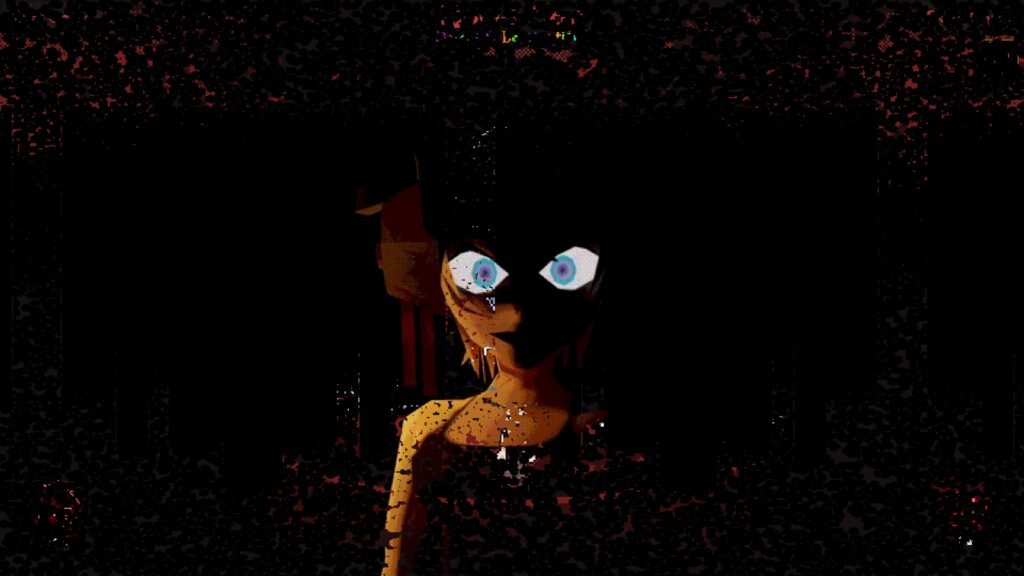
The first thing that grabbed me was the game’s aesthetic: a mix of PS1-era low-poly graphics and 90s FMV-inspired HUD, anchored by a striking main character design. Created by Karbonic, the solo developer behind the studio Fading Club, Psychopomp Gold quickly became an obsession. It left me confused, joyous, and horrified in equal measure—a strange blend of emotions I won’t soon forget.

The game begins with a strange, off-kilter prologue. The protagonist—a young woman—rants about conspiracy theories: secret catacombs beneath government buildings, shadowy alien creatures hiding in plain sight, and a world brimming with unseen horrors. Frustrated with the lies she perceives, she invents a mind-reading helmet—the titular Psychopomp. But instead of decoding thoughts, the device reveals a hidden, surreal dimension that no one else seems to perceive (or so she claims).
From there, the game thrusts you into its unsettling world. Your journey begins in a drainage pipe, knee-deep in still, cold water under the dim light of the moon. The gameplay evokes classic dungeon crawlers, with grid-based first-person movement, but through the warped lens of a chunky FMV HUD. Whirring gears, liquid pistons, and an overlay featuring haunting, dynamic portraits of the protagonist’s face—and how much damage she has sustained—immerse you further.

Interaction is purposefully tactile. Four action keys allow you to observe objects and NPCs, triggering the protagonist’s cryptic, often unnerving commentary; speak to them in vain attempts at connection; touch them, opening possibilities for exploration; or, in a moment of visceral power, wield a hammer—the sound of impact a sickening crunch that reverberates uncomfortably. The game seldom explains its mechanics outright. Instead, discovery unfolds organically as you explore, experimenting with these tools to unlock pathways and piece together the fractured world through the protagonist’s twisted perceptions.
The surface environments feel unsettlingly familiar: a school, a hospital, a water treatment plant. These mundane, government-funded locations exude a nostalgic yet uncanny atmosphere, brimming with the eerie quiet of liminal spaces. You’ll feel the dread of dimly lit hospital corridors, their silence broken only by your echoing footsteps, or the oppressive glow of red exit signs buzzing in deserted school hallways.

But the descent begins with the elevators—portals to the unknown. Each ride is a ritual of tension, marked by grinding gears, shifting camera angles, and the protagonist’s unsettling smile, all bathed in blood-red light.
Below the surface, the environments spiral into madness. Sewers teem with bug-eyed anime slime monsters. A grotesque flesh city pulses on tendrils, overtaken by enormous moths. Every level is a labyrinth of bizarre, unsettling sights. Among the oddities, you’ll encounter the Thraits—dog-like creatures that inexplicably radiate kindness amidst the chaos. Your ultimate goal in each area is to locate the Jewel of the Earth, an organic orb resembling a fetus, pulsating with cryptic significance.
The soundtrack elevates every moment. At times, it mirrors nostalgic, dreamy vocals reminiscent of SUPERCAR; at others, it plunges into Silent Hill-esque soundscapes of oppressive tones and eerie ambience. These shifts heighten the unease, amplified by visceral audio cues: the aforementioned hammer’s crunch, the echo of footsteps through desolate halls, or the haunting cries of unseen entities.

Psychopomp Gold doesn’t just disorient—it demands introspection. The narrative is deliberately fragmented, forcing you to connect its threads like a conspiracy theorist with a corkboard, frantically tying together cryptic logs, distorted imagery, and surreal environments. Even in the final moments, answers remain tantalizingly incomplete, leaving the story open to interpretation and reflection.
This game isn’t for everyone. Its cryptic storytelling and surreal design may alienate some, but for those willing to embrace the madness, it offers a poignant, deeply affecting tale. By the end, the entire journey is reframed in a way that challenges your perceptions and lingers in your mind long after the credits roll. Psychopomp Gold explores the razor-thin line between genius and insanity, showing us that in chaos, there’s clarity. Sometimes, it’s only by stepping into the unknown that we can truly understand ourselves.